

 Image 1 of 1
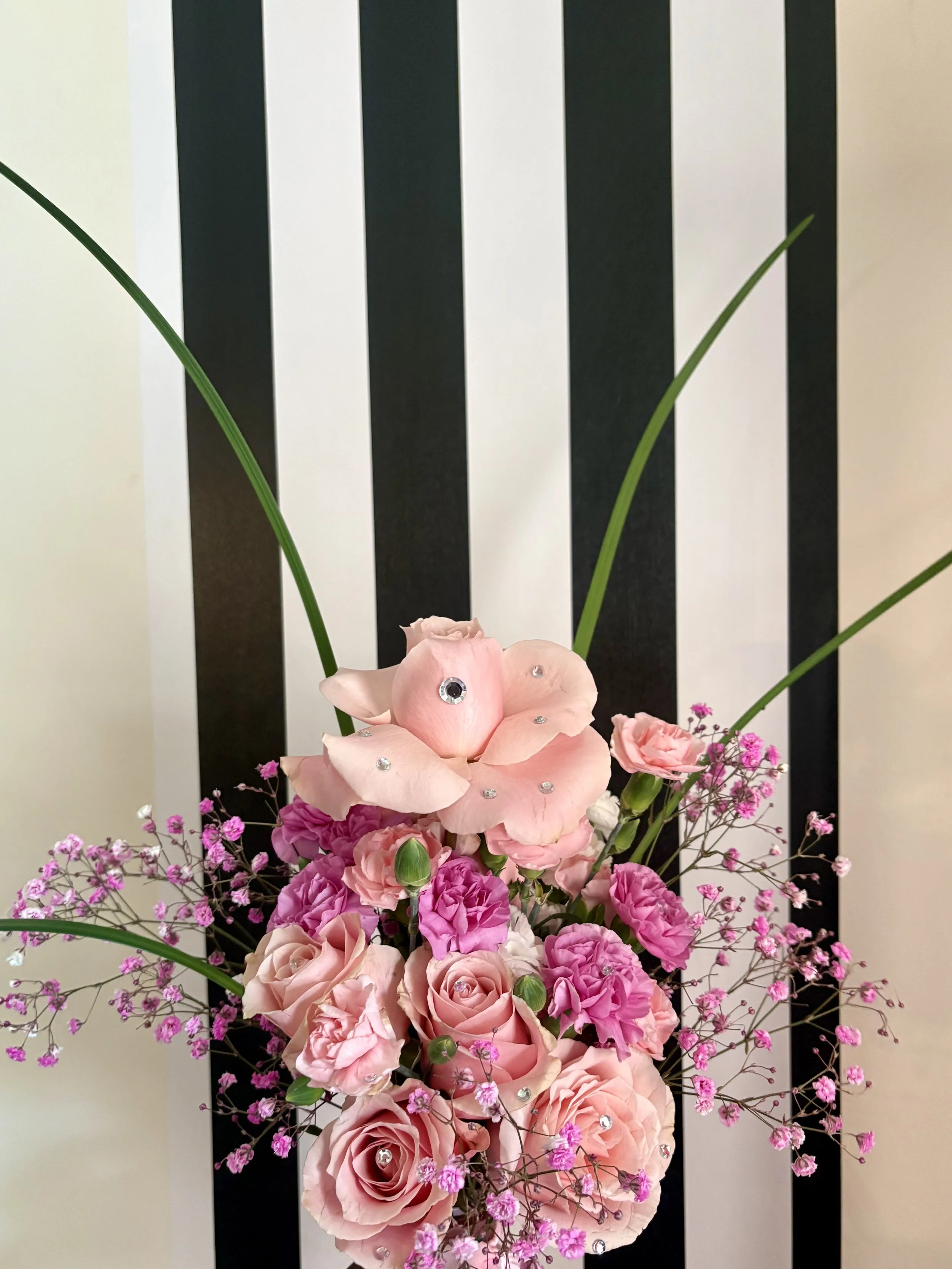
A charming seasonal arrangement for smaller spaces.
Roses, carnations, and baby’s breath each bring distinct shapes and textures to an arrangement, but their color roles are surprisingly flexible. You can swap colors among them to achieve different moods and effects without disrupting the overall balance.
How to use interchangeable colors
Monochromatic look: Use the same color across roses, carnations, and baby’s breath for a unified, elegant display (e.g., all blush or all deep red).
Two-tone contrast: Pair two colors among the three flower types to create focal points—use bolder color on roses, softer on carnations and baby’s breath, or vice versa.
Even distribution: Mix a color evenly through all three types for a cohesive, garden-fresh appearance.
Accent pops: Reserve one color for small clusters of baby’s breath to create delicate speckles of contrast around solid roses or carnations.
*Note: Colors/flowers interchangeable, this is the standard size for this tier*
A charming seasonal arrangement for smaller spaces.
Roses, carnations, and baby’s breath each bring distinct shapes and textures to an arrangement, but their color roles are surprisingly flexible. You can swap colors among them to achieve different moods and effects without disrupting the overall balance.
How to use interchangeable colors
Monochromatic look: Use the same color across roses, carnations, and baby’s breath for a unified, elegant display (e.g., all blush or all deep red).
Two-tone contrast: Pair two colors among the three flower types to create focal points—use bolder color on roses, softer on carnations and baby’s breath, or vice versa.
Even distribution: Mix a color evenly through all three types for a cohesive, garden-fresh appearance.
Accent pops: Reserve one color for small clusters of baby’s breath to create delicate speckles of contrast around solid roses or carnations.
*Note: Colors/flowers interchangeable, this is the standard size for this tier*